
A new kitchen, a rewire, a loft conversion or an extension can transform a home. Living in the middle of it is another matter. If your Cardiff home is about to be stripped back and you are wondering whether to stay put or move out for a while, this guide will help you decide, plan the timing and find somewhere suitable nearby.
Do you need to move out at all?
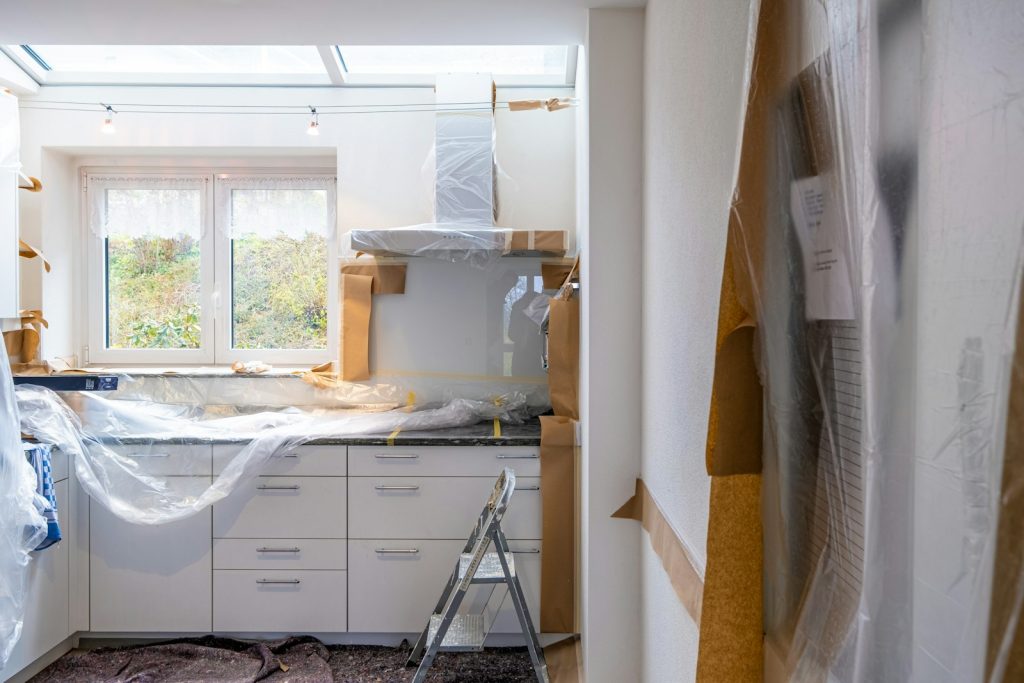
Plenty of people live through building work, and for a bathroom refit or redecorating it is often manageable. It becomes much harder when the work affects the things you rely on every day. Moving out for part of the project is worth considering if:
- you will be without a working kitchen or your only bathroom for more than a few days;
- the electrics are being rewired and the power will be off for long stretches;
- floors are coming up, walls are being knocked through or structural work is under way;
- there will be heavy dust, for example from plastering, sanding or chasing out walls;
- someone in the household works from home, works night shifts, has a health condition or needs a calm space.
Your builder is the best person to ask. A good one will tell you which stages are the most disruptive and whether it would be quicker and safer for them to work in an empty house. Sometimes moving out actually shortens the job, because trades are not working around furniture and family life.
Plan around the worst weeks
You may not need to be away for the whole project. Ask for a written programme showing what happens when, and identify the weeks when the house will be genuinely unliveable. Many people book a short-term let just for that period and move back once the kitchen or bathroom is working again.
Building work tends to run late, whether because of the weather, a delayed delivery or something found behind a wall. Build in some slack, and choose accommodation that lets you extend if the finish date moves. Equally, check what happens if the work finishes early.
Check your home insurance first
Major insurers, including Aviva and Ageas, advise telling your home insurer before significant building work starts. Renovations can affect your cover, and many policies also have conditions about homes left unoccupied for a period. A quick call before work begins can save a refused claim later.
It is also worth knowing that the alternative accommodation section of a home insurance policy is normally there for when your home becomes uninhabitable because of something the policy covers, such as a flood, fire or escape of water. It will not usually pay for a stay you choose to take during planned improvements. If the renovation is itself the repair after an insured event, the position is different; our guide to home insurance alternative accommodation explains what to ask.

Why staying nearby helps
If you are renovating in Cardiff, staying in the city rather than with relatives further away makes life easier. You can call in to check progress, answer the builder’s questions on the spot, let in a delivery, and keep your normal routine for work and school. Short trips back to the house also mean you can bring a smaller amount with you and swap clothes or post as you go.
When comparing places, ask whether the price includes bills, whether you can extend, whether there is parking, whether pets are accepted, and whether there is a kitchen good enough to cook in every day. Our guide to weekly lets in Cardiff covers how longer bookings usually work.
How Bungalow Ty Cwtch fits, and where it does not
Bungalow Ty Cwtch is a detached, one-bedroom bungalow on Cambridge Street in Grangetown, about 15 minutes’ walk from the city centre and 10 minutes from Cardiff Central station. For anyone renovating elsewhere in Cardiff, it is close enough to pop back to the house without a long journey, and we are happy to take longer stays.
It suits a single person or a couple best. There is a king-size bed in the bedroom and a double sofa bed in the living room. The kitchen has a hob, oven, microwave, dishwasher, kettle and toaster, which matters if your own kitchen is the room being ripped out. Electricity, heating and Wi-Fi are included in the price, with fans provided for warmer weather, and there is a 65-inch smart TV with Netflix in the living room plus a smart TV in the bedroom. Free on-street parking is on the street right outside, although spaces cannot be reserved.
There are limits. With one bedroom, a larger family will be cramped. There is no washing machine or dryer, so you may want to keep laundry going at home if your utility room is still usable. We welcome assistance dogs but no other pets. The bungalow is on one level with one step at the front door, and our accessibility page gives the full details.
We charge the same nightly rates whatever the length of stay, with no cleaning fee. Booking direct on this website gets you 10% off our standard nightly rate, and direct bookings can be cancelled free of charge up to 7 days before check-in, with the exact terms shown in the booking form. If you are also between a sale and a purchase, see our guide to where to stay between homes, and for anything over a few weeks, our guide to longer stays in Cardiff.
Frequently asked questions
Will my home insurance pay for somewhere to stay during a renovation?
Usually not, if the work is a planned improvement. Alternative accommodation cover is normally for when your home is uninhabitable because of insured damage. Check your own policy wording or ask your insurer.
Can I book for part of the project and extend later?
Yes, many people book the most disruptive weeks first and extend if the work runs over. Ask about extending as early as you can, because it depends on what is already booked.
Can my builder or a tradesperson stay at Bungalow Ty Cwtch instead?
Yes. Working visitors and contractors are some of our most regular guests, and invoices can be issued in a company’s name.
See Bungalow Ty Cwtch and book direct on this website for 10% off our standard nightly rate.